

 KRP CNC Satış
 KRP CNC Satış
 KRP CNC Satış
 KRP CNC Satış
 KRP CNC Satış
 UHM Makina
 KRP CNC Satış
 KRP CNC Satış
 UHM Makina
 KRP CNC Satış
In this section of our website, where we offer pre-owned CNC lathes, you can find general information below and listings for CNC lathes for sale above.
WHAT IS A CNC LATHE AND WHAT DOES IT DO? : CNC lathes, which hold great importance in terms of precision and speed among lathe machines, are tools where the driver motors connected to the axes are operated via numerical data entered into the control unit. This allows for fully automated chip removal and shaping processes on the workpiece. CNC is an abbreviation for Computing Numerical Control. It refers to numerical data under the control and supervision of a computer. Unlike universal lathes, parallel and perpendicular movements to the workpiece are provided automatically rather than being left to the manual control of an operator.
INTERNAL STRUCTURE OF THE CNC LATHE : A CNC lathe machine typically has two fundamental axes: the X-axis and the Z-axis. The Z-axis refers to the movement of the cutting tool parallel to the spindle axis, while the X-axis indicates the tool's movement perpendicular to the workpiece. Other axes, which we describe as auxiliary axes of CNC machines, are named the C-axis, Y-axis, A-axis, and B-axis.
Ball Screw : As we know, precision and speed are vital in CNC machines. During axial movements, the heat and wear caused by friction on the shafts can negatively affect the targeted precision. Gaps known as "backlash" affect axial positioning accuracy and cause dimensional errors in workpieces. This poses a major problem. Therefore, to minimize friction on the axis shafts, specialized equipment is used instead of the traditional lead screws found in universal lathes. To eliminate these issues, ball screws are used for axis feed and positioning. During motion, balls rotate within the screw. Since the contact surface is limited to only two points during rotation, friction is reduced, wear is minimized, and speed and positioning precision are increased.
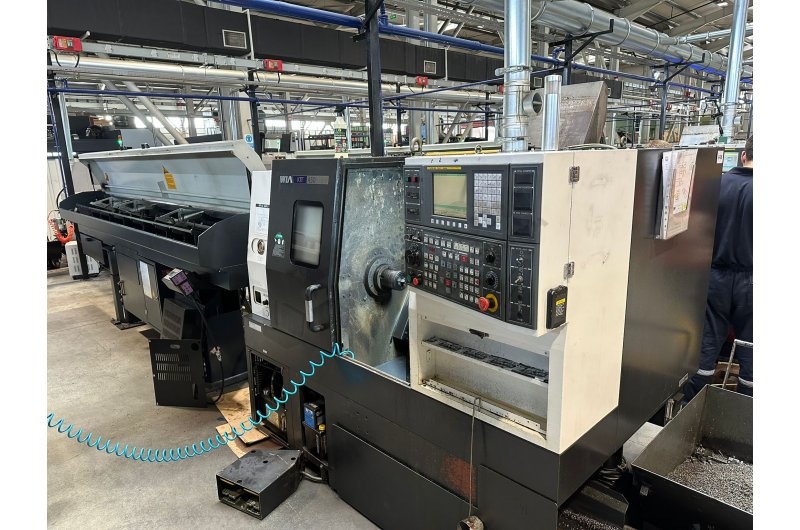
Spindle : This is the section where the chuck or collet holding the workpiece is mounted, and where the motor connected at the back provides rotational motion to the chuck and the workpiece. Models with opposing spindles are called sub-spindle CNC lathes. While most have one, some may have dual or even quad spindle configurations. Certain models of Austrian-made Emco lathes are examples of this.
Turret : This is the part where cutting tools and tool holders are mounted. In traditional lathes, it is called a tool holder (kater). The number of tools that can be mounted is limited, usually to four. Turret-based tool mounting systems allow for a higher number of tools. Tools are attached to the turret via tool holders, mandrels, and sleeves. Turret systems capable of holding 6, 8, 10, or 12 tools are the most common. Due to the compact internal structure of the lathe, mounting more tools is often difficult, though systems with ATC (Automatic Tool Changer) do exist. There are various types such as pneumatic turrets, hydraulic turrets, and servo turrets. A machine may feature a single turret or 2, 3, or even 4 turrets. Some models of Japanese manufacturer Nakamura-Tome lathes are examples of this.
Tailstock : This is an auxiliary machine element that secures the rotating workpiece from the opposite center to prevent oscillation. Tailstocks are located on the bed guideways in the same axis as the spindle. The tailstock quill or center has a 60° taper. This allows for a more rigid stabilization of the material via a center hole opened at the back of the workpiece. There are fixed and manual versions, but the most common in CNC machines are programmable tailstocks. This is because the movement of the quill or the main tailstock body is provided automatically.
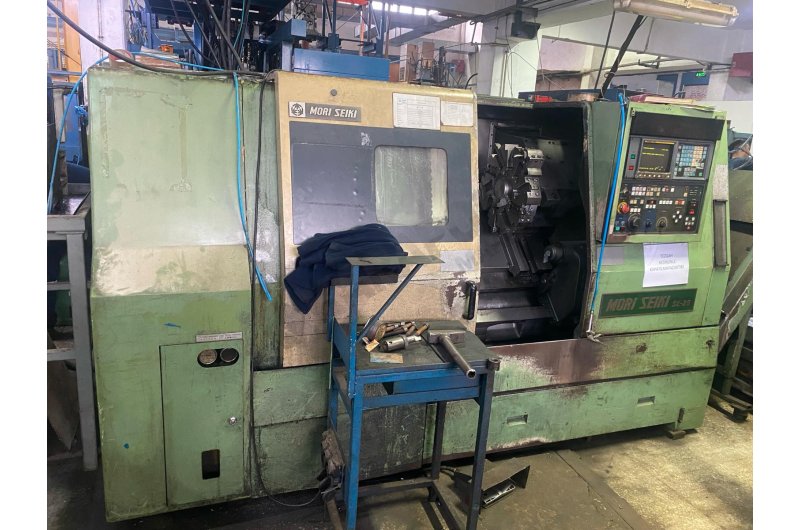
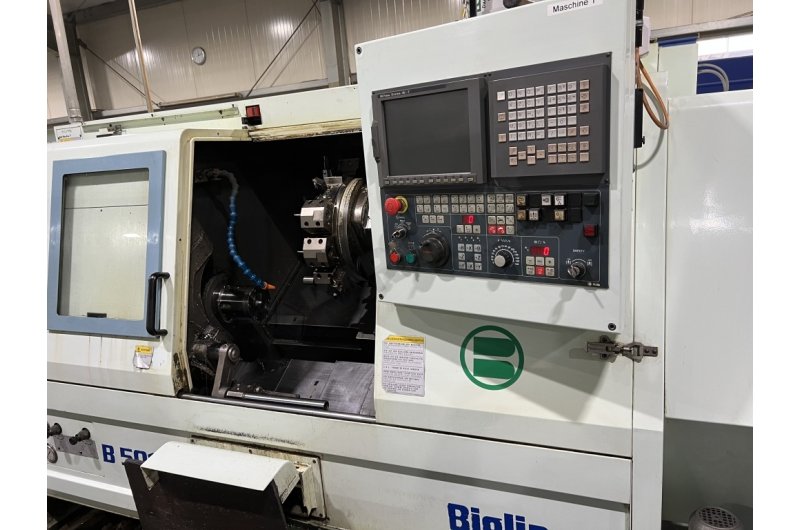
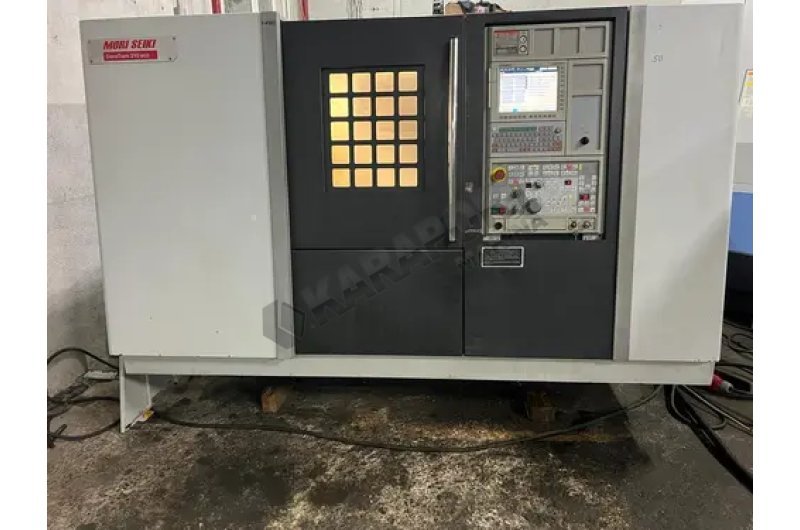
CNC Control Unit : This is the unit where all cutting parameter data, programs, and geometric drawings are entered to automatically manage the mechanical components like the spindle, turret, and axes. The most common units include Fanuc, Mitsubishi, Heidenhain, Siemens, and Syntec. Korean and Taiwanese machine tool manufacturers like Doosan, Hyundai, Takisawa, Goodway, Victor, Supermax, and Topper generally use these control units. However, some major manufacturers like Mori Seiki, Mazak, Okuma, and Haas prefer to use their own proprietary control units designed for their specific machine constructions to provide comprehensive service. These control units are further divided into sub-models based on functionality (e.g., Fanuc Oi-TC, Fanuc 21i-MB, Mitsubishi M80, Siemens Sinumerik 840C, Heidenhain i-TNC530).
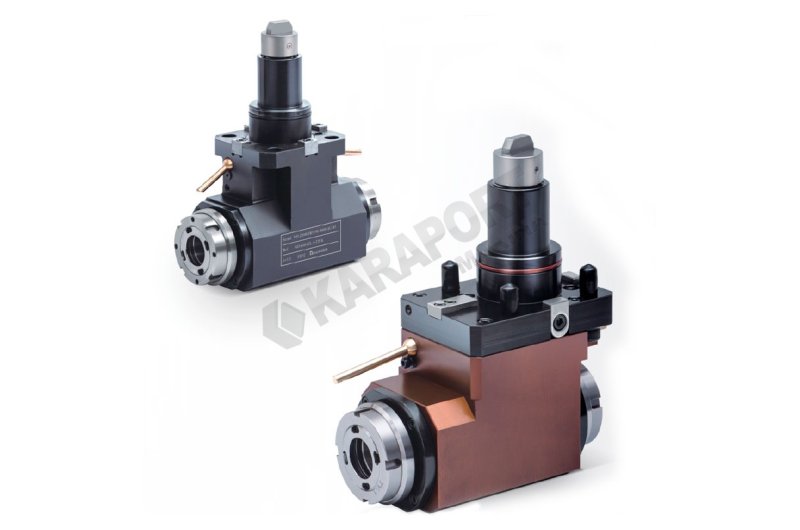
LATHES WITH ROTARY LIVE TOOLING : Machining with rotary tools, as the name suggests, refers to processing a cylindrical workpiece using a mobile rotating tool located on the turret or gang system. This method is primarily used for machining cylindrical, conical, and flat surfaces, as well as holes and grooves on the workpiece. It is similar to milling, but the rotary head used here, called a live tool, typically has a lower motor power (kW) if it is located on the turret. It is known as the C-axis, and machines equipped with it are called C-axis CNC lathes. If the rotating tool is not on the turret but is a separate milling head, it is called a turning center, which offers higher torque (kW) compared to a live tool. Depending on the mounting direction of the tool holder, operations like drilling, grooving, and threading can easily be performed by moving perpendicularly from the surface toward the center or axially from the face into the material. These machines are categorized as multi-axis lathes.
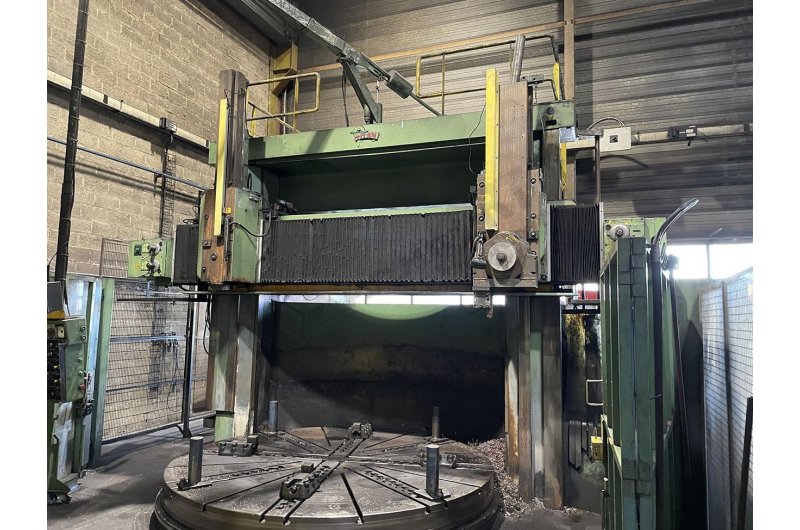
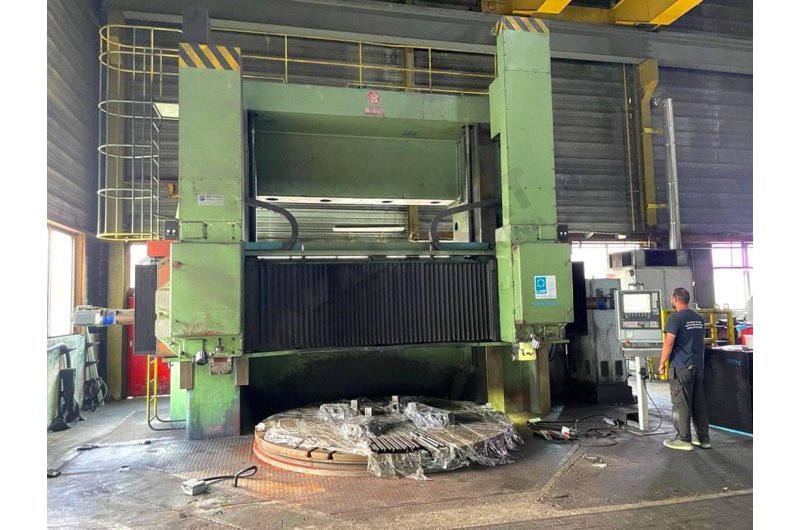
CNC lathes are divided into two main types: horizontal lathes and vertical lathes.
In the pre-owned CNC lathes category, you can find detailed information and prices for CNC lathes from dealers and pre-owned listings from direct owners.