



 KRP CNC Satış
 KRP CNC Satış
 KRP CNC Satış
 KRP CNC Satış
 KRP CNC Satış
The first time a spark was jumped from an electrode to a conductive material to create erosion opened the door to a process that would allow EDM technology to be rapidly developed and take its place among machining tools. In later years, the use of wire material as an electrode, again developed by the Soviets, dates back to 1967. The first wire EDM machine began to be produced in this year. In 1976, this technology gained momentum with the production of CNC wire EDM machines that could be controlled by computer. The technology race of CNC machines used today continues to show itself in the EDM sector as well.
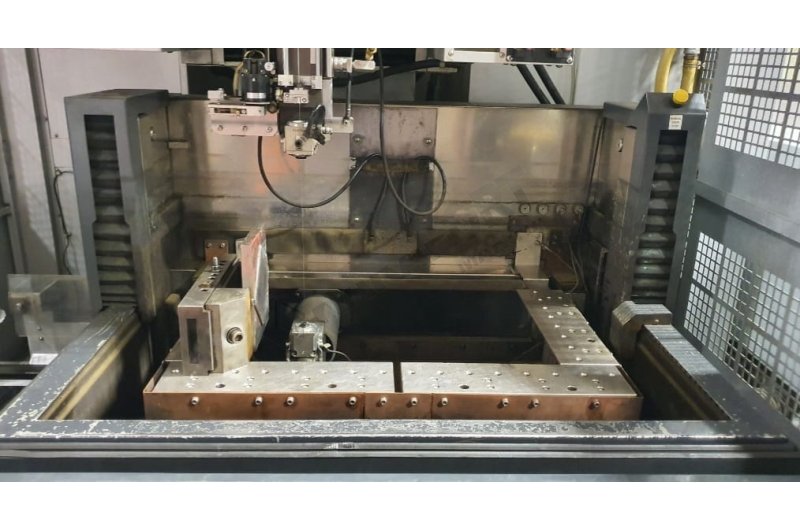
First, flushing-type wire EDMs were released, followed by submerged-type CNC wire EDMs with much better precision and cutting conditions. In terms of axial movements, it is possible to see the system in CNC machining centers here as well. Transferring table or axis movements with slides and ball screws mounted on the main body are similar points. What is different is the chip removal method, the machine internal structure designed accordingly, and the parts used. There is a table on the slides to which the workpiece will be connected from its edges. The table can be designed as a square frame, U, or L shape. It varies according to the manufacturer. The tables of modern flushing-type and submerged-type CNC erosion machines are enclosed in a closed cabin due to cutting conditions. In this way, the overflow and splashing of the dielectric fluid are prevented. The area inside the cabin is defined as the working area.
Providing the necessary machine operation and environmental conditions before the cutting process begins is very important for CNC erosion machines. It is required to operate the machine in a closed area where the ambient temperature is constant, the dielectric fluid is kept at a certain degree, and far from vibration and dust, or these must be fulfilled to the maximum extent. Ambient temperature, the purity value of the dielectric water, and the temperature value are constantly controlled by the machine. It goes into an alarm state at critical limit values. These values are introduced to the machine by the manufacturer. The ideal ambient temperature is 20-22 ° and the pure water value is around 10 µs. The pure water used in the machine will get dirty due to the slag formed during cutting. The pumps inside the DA unit serve to keep the purity degree constant by continuously passing the water first through filters and then through the resin tank according to the PH value. Control is provided with a special probe. If the PH value is higher than the nominal value introduced to the machine, the water cycle continues automatically via a 2nd pump. If it is low, it changes the contactor valve paths and sends the water only to the filter unit.
The chip removal process of wire EDM machines by cutting takes place between the upper head and the lower head. The wire, which is guided from the upper head by special bearings called guides, is transported to the lower head through the hole on the workpiece or right from its edge with feeding or pulling motors, and from there to the waste wire unit with guiding guides and pulling rollers located in the lower head. The wire threading process can be done manually, or it can be done automatically by giving direction with spraying along with water. This is called automatic wire threading. It is a sought-after and preferred feature in CNC wire EDMs. In machines with automatic wire threading units, the upper and lower heads are positioned vertically on the same axis with each other, and at the same time as the water sprayed from the upper head nozzle section under pressure and vertically to the lower head nozzle section, the wire feeding motors feed the wire and deliver it to the lower head. During this time, the vacuuming feature is activated so that the lower head can catch the wire better and faster; it goes to the wire clipping unit if available, or to the waste container if not. Whether the wire is attached or not is transmitted to the machine via sensors located in both heads. In case of wire breakage, the same sensors transmit the wire-out alarm as an error message to the control unit. The pick-up pads or electrode pads located in the upper and lower head are spare parts that must be replaced at regular intervals, where the current coming from the machine power unit is transmitted to the wire. Generally, hard materials like carbide or tungsten are used. Their wear causes problems in creating sparks and even causes vibration in the wire, resulting in poor surface quality. The wire used varies according to the type and hardness of the material to be processed and the desired surface quality. For different diameters from 0.05 mm to 0.4 mm, copper, zinc, brass, molybdenum, or alloy wires are the most commonly used. If the wire type and diameter used in the machine change, attention should be paid to changing some parametric values to introduce this to the machine. Wire alignment, tension between the upper and lower head, wire feeding speed of the motors, current, and power values are automatically modified after selection; many parts such as electrode pads, guides, nozzles, etc., must be replaced according to the appropriate diameter.
Another feature of wire EDM machines is their ability to perform angled cutting. These auxiliary axes used for angled conical cuts are known as the U-axis and V-axis. For wire EDMs where X and Y movement is from the table, U-V auxiliary axes are in the upper head. Since axial movements vary from manufacturer to manufacturer, to make a general definition: the movement of the upper head in the opposite direction to the lower head in the X-axis direction is the U-axis, and the opposite movements in the Y-axis direction are the V-axis. They have +/- values according to their positions in the Cartesian system. Due to their limited movement capability, the tilt angle of the wire between the upper and lower head is also limited. Generally, a cutting angle varying between 15°, 30°, and 45° is provided. In angled cuts, guides suitable for special angled cutting are attached to both heads. Guides and bushes made of hard material that wear out slowly and have a long service life, such as diamond, are ideal.
Side information for wire erosion cutting:
-
A nozzle suitable for the spray pressure must be selected for proper cutting. It is extremely important for removing the slag torn off by the spark between the wire and the part during cutting with pressurized water.
-
As is known, there is no need for grinding the part after the cutting process in wire EDM. Since the resulting surface will be in microns, there should be no wire marks.
-
The approach of the upper head to the material must be adjusted very carefully against a possible collision. The distance between the lower head nozzle and the part lower surface and the upper head nozzle and the part upper surface should both be 0.5µ. You can use a feeler gauge for this.
-
Wire alignment must be performed once a week and wire tension must be checked.
-
Maintenance and part calibrations of CNC wire EDM machines, which have all this complex structure and are one of the most suitable machines for precise cutting, must be carried out continuously. Care should be taken in the selection of consumables such as wire, resin, and filters.
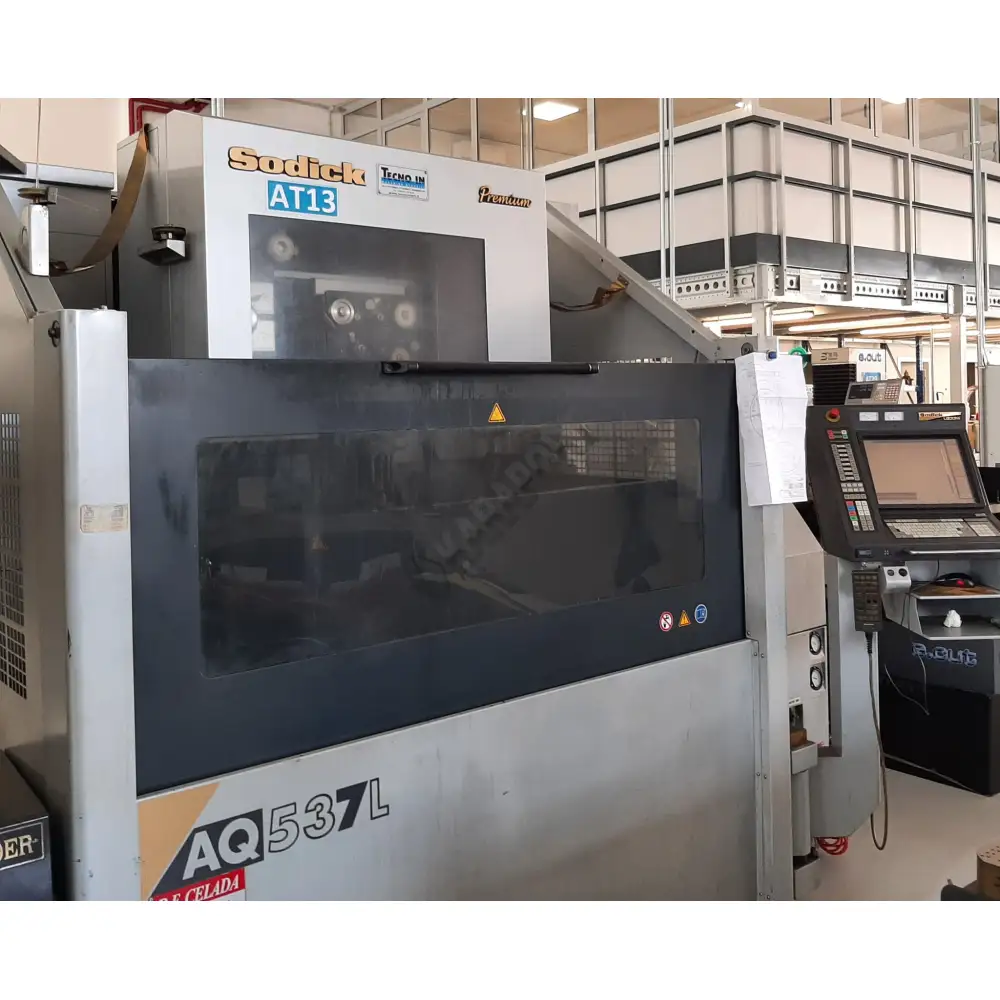
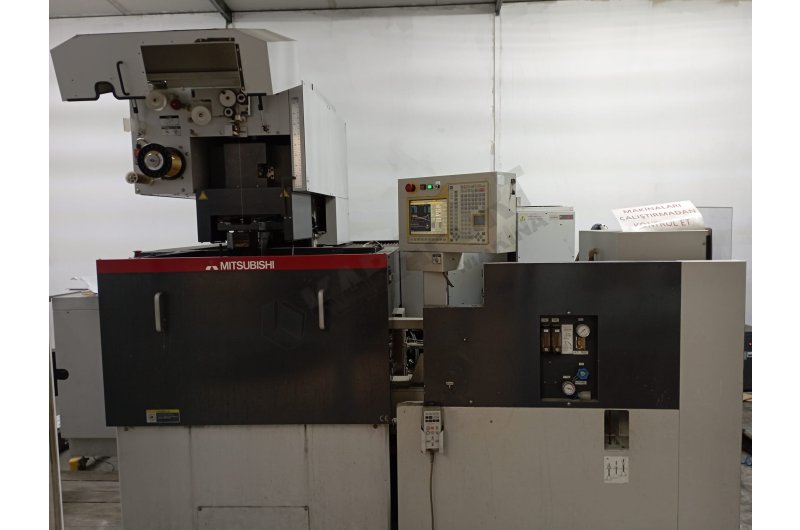
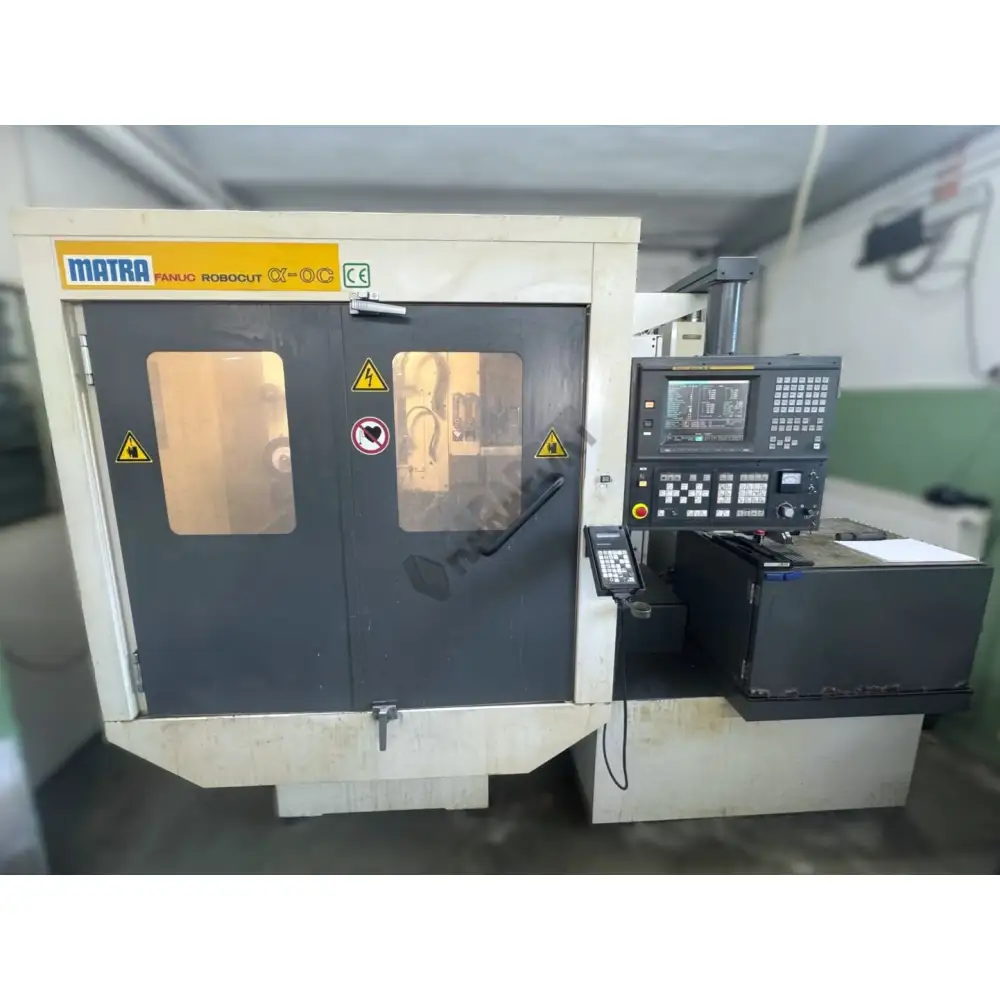
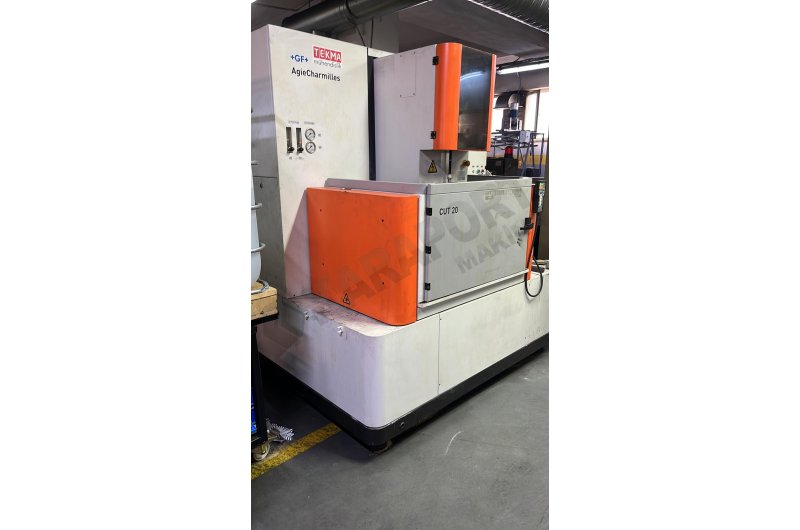
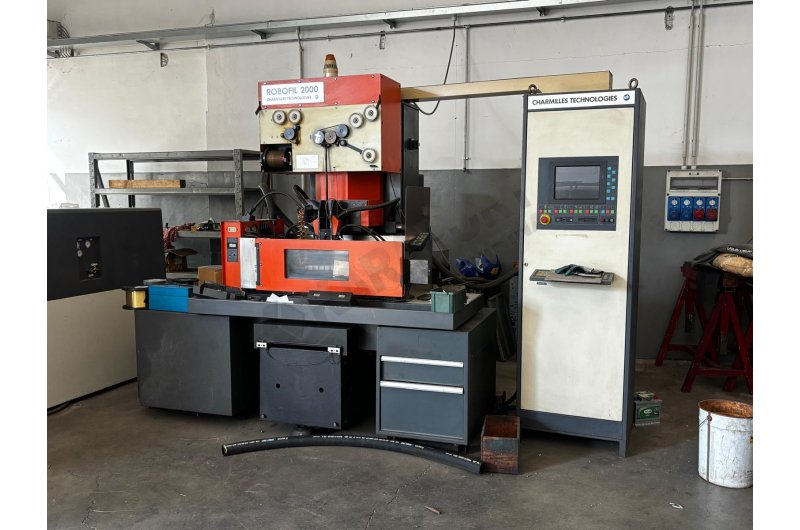
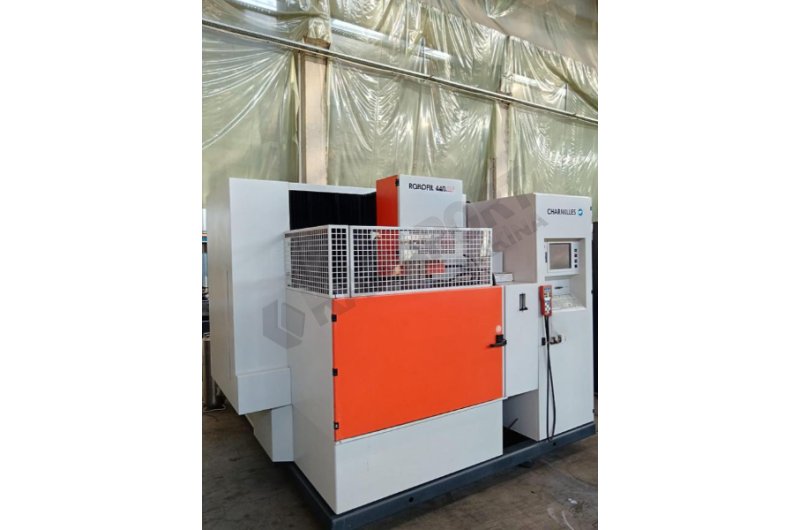
The most sold wire EDM brands used in Turkey, in mixed order, are as follows: Japanese wire EDM manufacturers Fanuc, Sodick, Mitsubishi, Makino, Brother; European Swiss George Fischer group brands Agie and Charmilles (which once produced under different roofs and now under a single brand); Korean origin SPM brand wire EDMs, and major Taiwan brands such as Chmer.
Under CNC wire EDMs, there are listings and prices for pre-owned and new cnc edm machine sellers and second hand for sale cnc wire erosion machines from owner.