



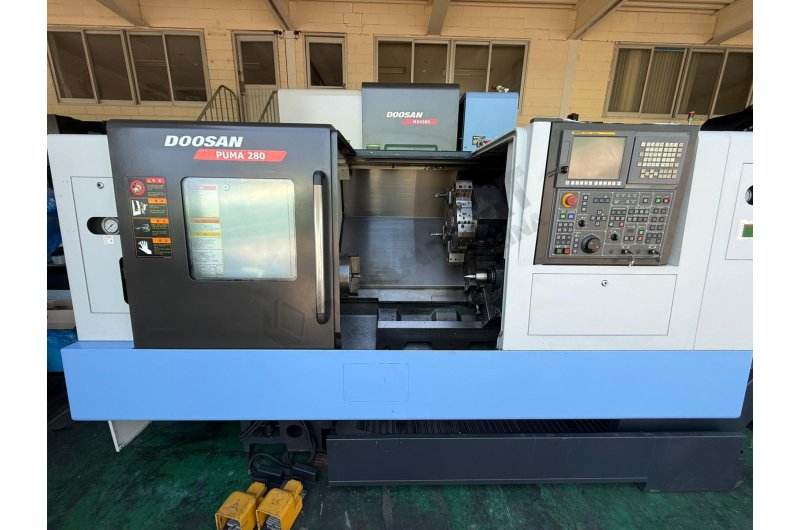
 KRP CNC Satış
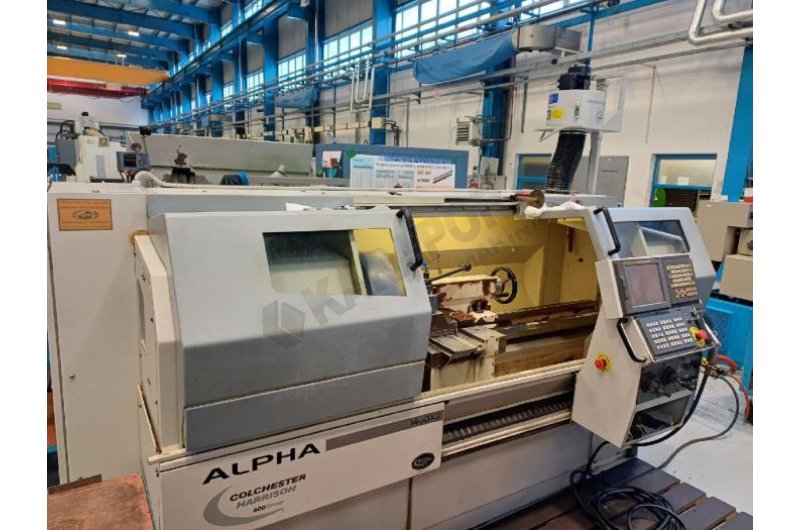 KRP CNC Satış
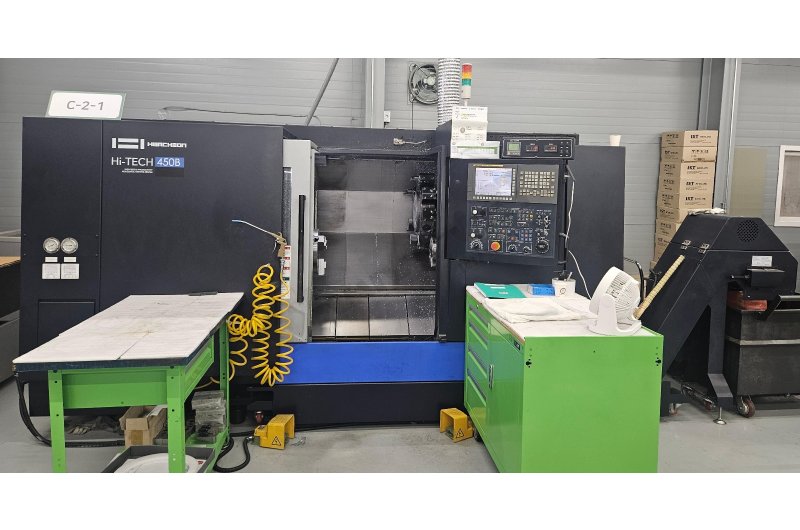 KRP CNC Satış
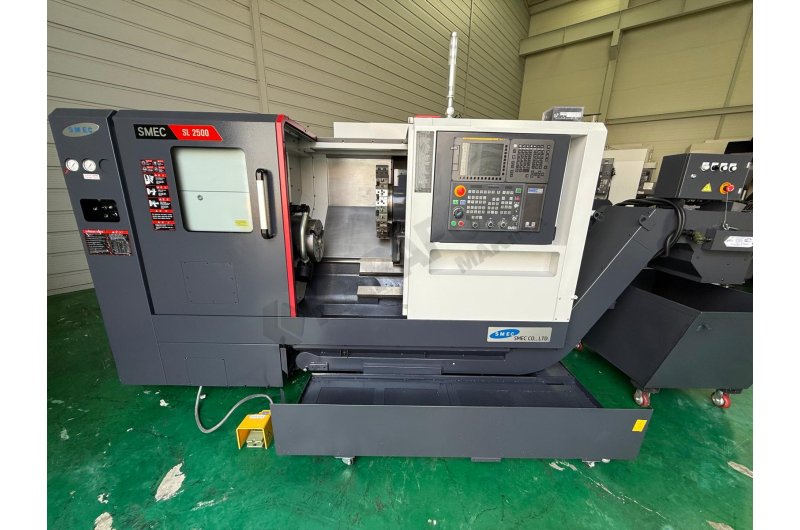 KRP CNC Satış
 KRP CNC Satış
 KRP CNC Satış
 KRP CNC Satış
 KRP CNC Satış
 KRP CNC Satış
 KRP CNC Satış
OVERVIEW OF TURNING: Classified under manufacturing techniques, turning is the most widely used process and holds a vital place among material removal methods in the manufacturing industry. The main principle of the method is the removal of chips from a rotating workpiece through the movement of the body where stationary or rotary (live) tools are mounted. The place where the workpiece is connected or clamped is the collet. This is called the chuck. Lathe chucks can be 3-jaw or 4-jaw, as well as vise-type or faceplate chucks. In the industry, the term "jaw" is commonly used. The part of the lathe where the chuck is mounted is called the spindle. The spindle is rotated at a specific RPM; therefore, the chuck and the connected workpiece rotate with it. The drive for the spindle comes from the gearbox located right behind it. If the cylindrical material to be processed is long, a tailstock, which is a lathe element located directly opposite the spindle, is used. The tailstock serves to stabilize the workpiece between itself and the spindle, preventing oscillation caused by centrifugal force. Cutting tools and inserts are positioned very rigidly in the tool holder (kater) or turret located between the spindle and the tailstock. The chip removal process is performed by moving the tool back and forth toward the chuck, and up and down toward the center of the rotating workpiece.
GENERAL OVERVIEW: Lathe machines are generally machines that remove chips by rotating a horizontal or vertical spindle and its connected workpiece, while the cutting insert in the tool holder or turret approaches the material from the face or surface in the X and Z axis directions. Lathes were first produced as universal models and later began to be manufactured as CNC lathes with the adaptation of CNC control units that enable fully automatic operation. The transition from universal lathes to CNC lathes did not happen instantly. Generally, we can classify lathes as follows:
- Watchmaker lathes
- Benchtop lathes (Hobby type lathes)
- Universal lathe machines
- Hydraulically controlled lathes
- Electronically controlled lathes
- Air lathes
- Copy lathes
- Turret lathes
- Numerical Control or simply NC lathes
- CNC lathes (Computer Numerical Control)
MAIN OPERATIONS PERFORMED ON LATHES: Different operations can be performed based on the targeted geometry of the workpiece.
- Facing operation: The process of cutting or chip removal through the movement of the cutting tool perpendicular to the workpiece axis.
- Longitudinal (cylindrical) turning operation: Removing chips from the surface parallel to the workpiece axis. The tool feed rate is constant.
- Taper turning operation: Shaping the material by approaching and moving the cutting insert at a specific angle to the workpiece axis.
- Profile turning operation: Removing excess material by moving a tool prepared in a specific profile perpendicular to the material.
- Grooving operation: A similar process to facing. The tool advances perpendicularly from the outer surface of the workpiece toward the center, removing a certain amount of material.
- Threading operation: The process of removing chips with a specific and suitable cutting tool, moving perpendicularly for depth and moving in a parallel feed motion suitable for the lead/pitch.
- Reaming operation: A precision-enhancing process used to improve the surface roughness of holes previously opened with a drill bit.
- Drilling operation: Removing chips from the workpiece by mounting a drill bit to the tool holder or turret.
- Boring operation: A process performed with a tool larger than the diameter of the existing hole to enlarge it.
EFFICIENCY IN TURNING PROCESSES: To achieve the best results from lathe machines, there are certain cutting parameters to consider. These are cutting speed, feed rate, and depth of cut. In addition to these three parameters, selecting the most suitable cutting tools based on the material structure is another important factor affecting surface precision and work efficiency. Besides the choice of cutting inserts, the cutting fluid used to remove chips from between the insert and the surface during cutting is another factor affecting surface quality. Cutting fluid not only removes the chips from the processing area but also helps reduce the heat generated by friction during cutting. It prevents tool wear and extends tool life. Therefore, the properties and selection of the cutting fluid used are extremely important and directly affect efficiency.
In this section of our website, where we offer pre-owned CNC lathes, you can find general information below and listings for CNC lathes for sale above.
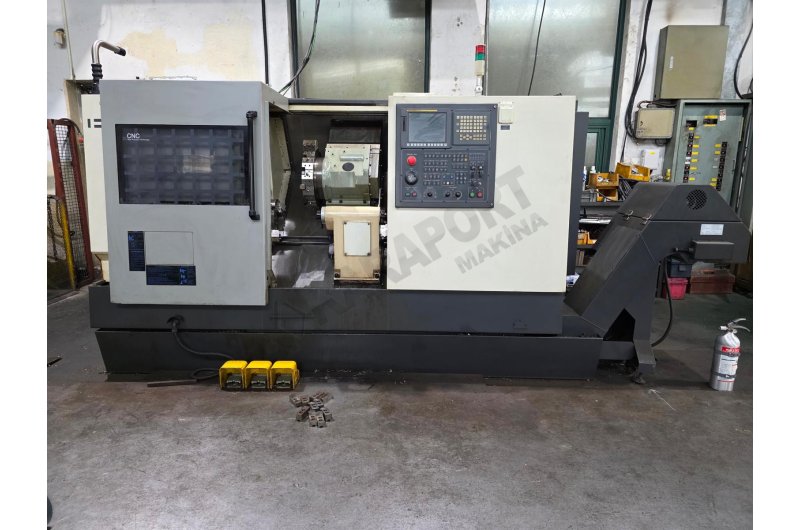
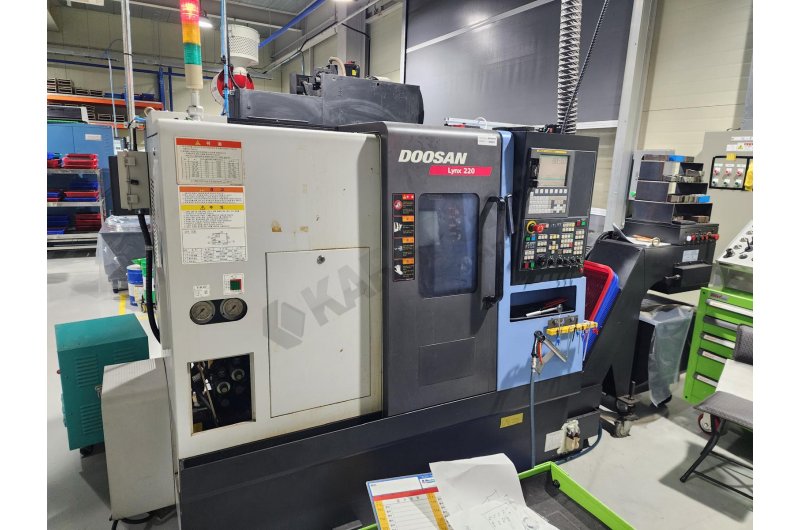
WHAT IS A CNC LATHE AND WHAT DOES IT DO? : CNC lathes, which hold great importance in terms of precision and speed among lathe machines, are tools where the driver motors connected to the axes are operated via numerical data entered into the control unit. This allows for fully automated chip removal and shaping processes on the workpiece. CNC is an abbreviation for Computing Numerical Control. It refers to numerical data under the control and supervision of a computer. Unlike universal lathes, parallel and perpendicular movements to the workpiece are provided automatically rather than being left to the manual control of an operator.
INTERNAL STRUCTURE OF THE CNC LATHE : A CNC lathe machine typically has two fundamental axes: the X-axis and the Z-axis. The Z-axis refers to the movement of the cutting tool parallel to the spindle axis, while the X-axis indicates the tool's movement perpendicular to the workpiece. Other axes, which we describe as auxiliary axes of CNC machines, are named the C-axis, Y-axis, A-axis, and B-axis.
Ball Screw : As we know, precision and speed are vital in CNC machines. During axial movements, the heat and wear caused by friction on the shafts can negatively affect the targeted precision. Gaps known as "backlash" affect axial positioning accuracy and cause dimensional errors in workpieces. This poses a major problem. Therefore, to minimize friction on the axis shafts, specialized equipment is used instead of the traditional lead screws found in universal lathes. To eliminate these issues, ball screws are used for axis feed and positioning. During motion, balls rotate within the screw. Since the contact surface is limited to only two points during rotation, friction is reduced, wear is minimized, and speed and positioning precision are increased.
Spindle : This is the section where the chuck or collet holding the workpiece is mounted, and where the motor connected at the back provides rotational motion to the chuck and the workpiece. Models with opposing spindles are called sub-spindle CNC lathes. While most have one, some may have dual or even quad spindle configurations. Certain models of Austrian-made Emco lathes are examples of this.
Turret : This is the part where cutting tools and tool holders are mounted. In traditional lathes, it is called a tool holder (kater). The number of tools that can be mounted is limited, usually to four. Turret-based tool mounting systems allow for a higher number of tools. Tools are attached to the turret via tool holders, mandrels, and sleeves. Turret systems capable of holding 6, 8, 10, or 12 tools are the most common. Due to the compact internal structure of the lathe, mounting more tools is often difficult, though systems with ATC (Automatic Tool Changer) do exist. There are various types such as pneumatic turrets, hydraulic turrets, and servo turrets. A machine may feature a single turret or 2, 3, or even 4 turrets. Some models of Japanese manufacturer Nakamura-Tome lathes are examples of this.
Tailstock : This is an auxiliary machine element that secures the rotating workpiece from the opposite center to prevent oscillation. Tailstocks are located on the bed guideways in the same axis as the spindle. The tailstock quill or center has a 60° taper. This allows for a more rigid stabilization of the material via a center hole opened at the back of the workpiece. There are fixed and manual versions, but the most common in CNC machines are programmable tailstocks. This is because the movement of the quill or the main tailstock body is provided automatically.
CNC Control Unit : This is the unit where all cutting parameter data, programs, and geometric drawings are entered to automatically manage the mechanical components like the spindle, turret, and axes. The most common units include Fanuc, Mitsubishi, Heidenhain, Siemens, and Syntec. Korean and Taiwanese machine tool manufacturers like Doosan, Hyundai, Takisawa, Goodway, Victor, Supermax, and Topper generally use these control units. However, some major manufacturers like Mori Seiki, Mazak, Okuma, and Haas prefer to use their own proprietary control units designed for their specific machine constructions to provide comprehensive service. These control units are further divided into sub-models based on functionality (e.g., Fanuc Oi-TC, Fanuc 21i-MB, Mitsubishi M80, Siemens Sinumerik 840C, Heidenhain i-TNC530).
LATHES WITH ROTARY LIVE TOOLING : Machining with rotary tools, as the name suggests, refers to processing a cylindrical workpiece using a mobile rotating tool located on the turret or gang system. This method is primarily used for machining cylindrical, conical, and flat surfaces, as well as holes and grooves on the workpiece. It is similar to milling, but the rotary head used here, called a live tool, typically has a lower motor power (kW) if it is located on the turret. It is known as the C-axis, and machines equipped with it are called C-axis CNC lathes. If the rotating tool is not on the turret but is a separate milling head, it is called a turning center, which offers higher torque (kW) compared to a live tool. Depending on the mounting direction of the tool holder, operations like drilling, grooving, and threading can easily be performed by moving perpendicularly from the surface toward the center or axially from the face into the material. These machines are categorized as multi-axis lathes.
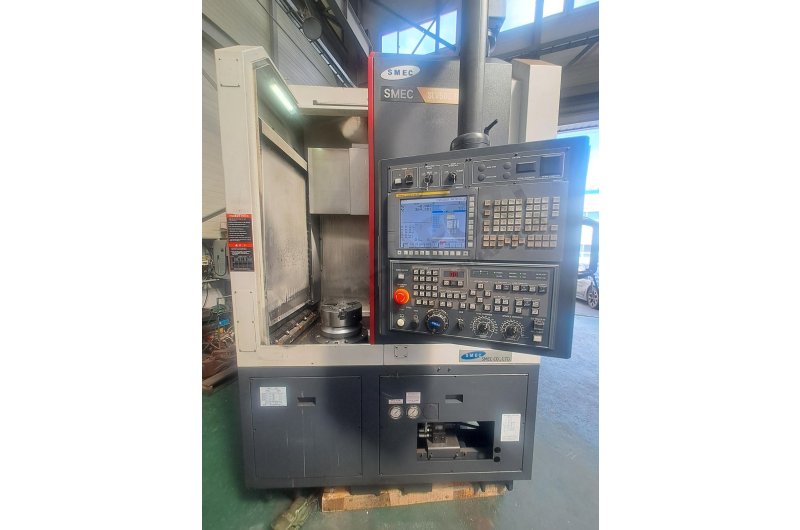
CNC lathes are divided into two main types: horizontal lathes and vertical lathes.
In the pre-owned CNC lathes category, you can find detailed information and prices for CNC lathes from dealers and pre-owned listings from direct owners.
Universal Lathe Machine The Universal Lathe Machine is a revolutionary piece of equipment that has transformed the manufacturing industry. With its advanced features and capabilities, it offers numerous advantages that make it an indispensable tool for any production facility.
So, what is turning? To explain turning simply, it is the name given to the process where a cutting tool is applied to another part rotating at a certain speed around itself, and this momentum shapes, drills, or cuts that part.
One of the most important advantages of the Universal Lathe Machine is its versatility. This machine can perform a wide range of operations such as turning, drilling, threading, and facing. It eliminates the need for multiple machines, saving both space and cost. Additionally, its user-friendly interface allows operators to easily switch between different functions without extensive training.
Another key benefit is the precision and accuracy it offers. These lathes provide consistent results with minimal errors. This level of precision is crucial in industries where even small deviations can lead to significant defects or failures.
Top Quality Universal Lathe Machines at Karaport
Lathe machines are an indispensable tool in the metalworking sector. Lathes, used for processes such as shaping, cutting, and drilling workpieces, play an important role in increasing the efficiency of production processes. Therefore, it is of great importance for businesses to choose the highest quality and most reliable lathe machines.
Karaport is a leading supplier in this field. Offering the highest quality Universal Lathe Machines to its customers, Karaport provides great advantages to businesses with its high-performance machines. Karaport's Universal Lathe Machines stand out from their competitors in terms of durability and precision.
The biggest advantage of Karaport's Universal Lathe Machines is the variety they offer. They can respond to all kinds of needs with machines in different sizes and capacities. Furthermore, thanks to these state-of-the-art machines, production processes accelerate and become more efficient.
Businesses need to choose the highest quality lathe machines. The high-performance machines provided by Karaport will provide businesses with a competitive advantage and optimize production processes. In addition, Karaport dominates the market with its lathe machine prices. Karaport is the only address for the highest quality Universal Lathe Machines.
Pre-owned Universal Lathe Machines Pre-owned Universal Lathe Machines are known as the must-have devices of the manufacturing industry. These machines have been used by countless masters and engineers to shape and mold various materials into complex designs. Despite being Pre-owned, they still possess the ability to provide precision and accuracy in their operations.
One of the most significant advantages of Pre-owned Universal Lathes is cost-effectiveness. Purchasing brand-new machines can be quite expensive, especially for small businesses or startups. However, by opting for Pre-owned equipment, manufacturers can save a significant amount of money without compromising on quality. These lathe models for sale have already proven their value over time and are usually sold well below the original price.
Additionally, Pre-owned Universal Lathe types offer an opportunity for customization and modification. Since these machines have been used before, they may come with additional attachments or modifications, can be rearranged according to the needs of businesses, and can adapt to additions or removals.
What Are the Universal Lathe Types? The lathe is a widely used machine in the metalworking industry. This machine is used for shaping and processing metal parts. The Universal Lathe, on the other hand, is a versatile type of lathe that can be used for different operations. Therefore, these lathe types are quite important.
Universal Lathe types can be listed as follows:
Horizontal-Parallel Universal Lathe Machines Parallel lathes, or horizontal lathe machines by another name, are effective in processing long and thin parts. They are especially preferred for obtaining cylindrical shapes. And these types of lathes provide precise and smooth results.
Vertical - Cnc Universal Lathe Machines Cnc (Computer Numerical Control) lathes, or vertical lathe machines by another name, make the production of more complex and detailed parts possible. These machines are equipped with Cnc technology. Thanks to computer programs, cuts can be made in desired dimensions and high precision can be achieved.
Multi-axis Universal Lathe Machines Multi-axis lathe machines have the ability to move in more than one axis. Thus, processing more complex geometries becomes easier. Multi-axis lathes can be preferred for more sophisticated and much more detailed productions.
Thanks to Universal Lathe types, efficiency increases in the metalworking industry and higher quality products are obtained. Therefore, it is important to generalize the use of these machines. For businesses to modernize and gain a competitive advantage, they need to invest in Universal Lathe types.
Universal Horizontal Lathes Universal Horizontal Lathe machines have introduced a game-changing structure in the world of precision engineering. These revolutionary machines have taken the manufacturing industry to a new level by offering unique precision and efficiency. If you are in the business of producing complex components or parts, Universal Horizontal Lathe machines might be exactly the product you are looking for.
First and foremost, these machines have extraordinary precision. Thanks to advanced Cnc technology, they can execute complex operations in an extremely precise manner. This not only ensures consistent quality but also significantly reduces waste. Universal Horizontal Lathe machines save you time and money in your business by minimizing errors and maximizing output.
These types of machines offer versatility like no other. Whether you need turning, drilling, grinding, or milling, Universal Horizontal Lathe machines can handle them all effortlessly. Their multi-axis capabilities allow for simultaneous machining operations, exponentially increasing productivity. This means faster turnaround times for your customers and increased profitability for your business.
Moreover, Universal Horizontal Lathe machines are built to last. Manufactured from high-quality materials and designed with durability in mind, these machines require minimal maintenance throughout their lifespan. This means lower operating costs and a higher return on investment.
If you want to take your precision engineering business to new levels of success, Universal Horizontal Lathe machines will be a wise investment tool for you. With its unique accuracy, versatility, and durability, these machines will revolutionize your production processes while increasing profitability. Don't miss the future of precision engineering; come to Karaport today for the highest quality Universal Horizontal Lathe machines!
Universal Vertical Lathes Universal Vertical Lathe machines are miraculous devices used for the purpose of automating cutting processes and achieving more detail and more precision. Vertical lathes can also be called Cnc lathes. The main reason for this is that vertical lathes are directed by a computer control and operating unit. These lathes have several parts that move in harmony with each other.
Universal Vertical Lathe machines have the ability to perform much more complex functions besides simple modeling. Workpieces in these lathe machines can be processed without being touched. One of the biggest advantages is that workpieces can be processed in a way that adapts to the specified specifications. This can be done thanks to the ability to determine the feed and cutting speed of the machine. Since more than one part can be used in different ways, time loss in part changes has been minimized. This returns to the business as efficiency and profitability.
Universal Vertical Lathe machines have the feature of recording the adjustments made and programmed patterns into their memory. This feature is an important advantage for users. It ensures that repetitive processes come out with the same quality, the same precision, and the same perfection.
Universal Vertical Lathe machines also have guides and sensors. By getting support from these products, users can easily position workpieces and dimension them precisely. Thanks to their precise results and fast production process, these machines have found a place for themselves in many fields such as the metalworking industry.
Universal Vertical Lathe machines are among the primary preferred lathes in the metalworking industry. Thanks to their automation and high precision, they provide fast and high-quality production. The use of Cnc vertical lathes increases efficiency in industrial production processes while also reducing production costs. Therefore, Cnc vertical lathe machines play an indispensable role in the modern metalworking sector.
On our Karaport machine trading site, under the relevant category, there are listings, descriptions, photos, and prices for pre-owned and new lathes from machinery dealers and pre-owned lathes for sale from direct owners.